
Signs You're Drinking Quality Kratom vs. Garbage: The Sensory Checklist Most First-Timers Never Get
 Ryan Okafor
Signs You’re Drinking Quality Kratom vs. Garbage: The Sensory Checklist Most First-Timers Never Get
You just cracked open a kratom extract shot. Maybe it’s your first one ever, or maybe it’s your fifth from a different brand. Either way, you’re about to drink it and you have absolutely no idea whether this product is quality or complete garbage.
Nobody taught you what to look for. Nobody handed you a checklist. You’re basically flying blind, hoping this purchase wasn’t a waste of money and that you won’t spend the next four hours feeling weird for all the wrong reasons.
That ends today.
Why Nobody Teaches You What Quality Kratom Actually Looks Like
Search “what is kratom” and you’ll get a wall of content explaining the plant’s origins, its alkaloid profile, and probably some scary warnings from institutions that have never actually helped anyone make an informed purchasing decision.
What you won’t find is practical, sensory-based guidance. Nobody tells you what a quality kratom extract should smell like when you open the bottle. Nobody explains how the onset should feel in your body versus what red flags feel like. Nobody gives you the real-time assessment tools to know, in the moment, whether you got something good or got played.
If you’re looking for the botanical basics first, our no-BS guide to kratom for curious high performers covers the fundamentals. But this guide is different. This is about developing your palate and your perception so you can tell quality from garbage in real-time.
Most first-timers learn through bad experiences. They buy something questionable, have a mediocre or unpleasant experience, and then either write off kratom entirely or spend months trying different products hoping to stumble onto something decent. That’s an expensive, frustrating way to learn.
What you need is a sensory framework. A checklist you can run through before, during, and after consumption that tells you exactly what you’re working with. Consider this your consumer protection toolkit.
The Taste Test: What Quality Kratom Extract Should (and Shouldn’t) Taste Like
Let’s address the elephant in the room: kratom doesn’t taste like a smoothie. The raw leaf is bitter. That’s just the nature of the plant. But there’s a massive difference between “this is an earthy, botanical flavor” and “this tastes like someone mixed dirt with chemical runoff.”

The Baseline Most People Expect
If you’ve read anything about kratom online, you’ve probably seen descriptions like “tastes terrible” or “you just have to choke it down.” That expectation has been set by years of poorly formulated products that prioritized nothing except cramming alkaloids into a bottle.
Here’s the thing: taste actually tells you something about formulation quality. When a product tastes like absolute garbage, it often means the manufacturer didn’t care enough to balance the formula, mask the harsh notes, or use quality extraction methods. They’re selling you a shortcut, not a finished product.
Signs of Quality in Taste
- Earthy but balanced: Quality extracts have a distinct botanical character, but it shouldn’t make you gag. Think of the difference between cheap instant coffee and a well-pulled espresso. Both are bitter, but one is drinkable and one makes you wince.
- Clean finish: After you swallow, the flavor should dissipate within a minute or two. You shouldn’t be tasting it for the next hour.
- No chemical aftertaste: If something tastes metallic, artificial, or “off” in a way you can’t quite describe, trust your instincts. Your tongue is detecting something that shouldn’t be there.
- Intentional flavor profile: Well-formulated products often include complementary ingredients to improve palatability without compromising the experience. This shows the manufacturer actually thought about the end user.
Red Flags in Taste

- Overwhelming bitterness that lingers: Some bitterness is expected, but if it’s so intense that you’re still grimacing five minutes later, that’s a sign of poor extraction or no effort at formulation.
- Off-putting chemical smell when you open the bottle: Trust your nose. Quality botanical extracts smell earthy, maybe slightly sweet. They don’t smell like a chemistry lab.
- Inconsistency between bottles: If the same product tastes noticeably different from one purchase to the next, that’s a quality control problem. Reliable manufacturers produce consistent results.
We’ve written extensively about why most kratom extracts taste like dirt if you want the deeper dive on extraction methods and palatability science.
The Onset Timeline: What a Clean Experience Should Feel Like
You’ve taken your first sip (or finished the shot). Now what? The next 30 to 60 minutes will tell you a lot about what you’re dealing with.
The 20-30 Minute Window
Quality kratom extract typically starts making itself known within 15 to 30 minutes on an empty or mostly empty stomach. This is your first checkpoint. Here’s what to notice:

- Gradual clarity: The onset should feel like a gentle shift, not a sudden jolt. Think of it like the sun coming up rather than someone flipping on a floodlight.
- Smooth energy: Quality products deliver energy that feels clean and focused. You should feel more alert, more present, maybe more motivated. It shouldn’t feel jittery or anxious.
- No immediate heaviness: If you feel sedated, foggy, or “too much too fast” within the first 20 minutes, that’s concerning. It may indicate an imbalanced alkaloid profile or an overly aggressive formulation.
For a detailed breakdown of what happens hour by hour, check out our guide on what actually happens from first sip to four hours later.
Red Flags During Onset
- Too-fast onset (under 10 minutes): If you’re feeling significant effects almost immediately, question what you just consumed. Quality extracts work with your body’s natural absorption process, not against it.
- Harsh “hit” sensation: The experience shouldn’t feel abrupt or jarring. If it does, the product may have concerning concentration levels or an unbalanced formula.
- Immediate nausea or discomfort: While some people experience mild stomach sensitivity with any botanical, immediate nausea can indicate a product your body is rejecting. Start with smaller servings if you’re new to kratom, and always consult a healthcare provider if you have underlying conditions.
The 3-4 Hour Arc
Quality kratom extract typically provides a sustained experience lasting 3 to 4 hours. During this window, you should feel:
- Consistent energy without peaks and crashes: Unlike caffeine, which often delivers a spike followed by a drop, quality kratom should feel more like a plateau. Steady, reliable, predictable.
- Mental clarity rather than fog: You should be able to think clearly, hold conversations, and do focused work. If you feel mentally impaired or confused, something’s wrong.
- A gradual, gentle tapering: When the effects start to fade, it should feel like a smooth descent, not like falling off a cliff.
The Next-Day Test: How You Feel Tomorrow Tells You Everything
This is the checkpoint most people forget about, but it’s arguably the most important one. How you feel the morning after tells you whether that product actually works with your body or against it.
Quality Kratom: Wake Up Feeling Normal
After consuming a well-formulated kratom extract, you should wake up the next day feeling… normal. Maybe well-rested. Maybe like you had a good night. But definitely not impaired, foggy, or regretful.
This is actually a key differentiator between quality products and garbage. When the alkaloid balance is right and the product is clean, your body processes it efficiently and returns to baseline without drama.
Problem Products: The “Hangover” Effect
Here’s what low-quality kratom often delivers the next morning:
- Grogginess: Feeling like you didn’t sleep well even though you did
- Brain fog: Difficulty concentrating, slower mental processing
- Physical sluggishness: Body feels heavy, unmotivated
- Mild headache: Often a sign of poor product quality or contaminants
If you experience these symptoms, take note. That product failed the most important test: it didn’t leave you feeling good about the choice.
The Regret Test
Ask yourself a simple question the next morning: “Am I glad I used that product yesterday, or do I regret it?”
Quality kratom should consistently pass the regret test. If you find yourself frequently wishing you hadn’t used a particular product, that’s all the information you need. Move on.
The Label and Transparency Checklist: What to Verify Before You Buy
Sensory assessment is powerful, but it’s even better when combined with pre-purchase due diligence. Here’s what to look for before you ever open the bottle.
What Should Be on the Label
- Clear serving size: The label should tell you exactly how much is in one serving. Mystery formulations that hide behind proprietary blends are a red flag.
- Ingredient list: You should know what’s in the product. Full stop.
- Manufacturer information: A real company with a real address that stands behind their product
- Age restriction (21+): Responsible brands clearly indicate this product is for adults only
- State restriction compliance: Kratom has varying legal status by state. Brands that acknowledge this and ship accordingly demonstrate they take compliance seriously.
Third-Party Testing and COAs
Certificates of Analysis (COAs) from independent labs are the gold standard for quality verification. Here’s what to look for:
- Testing from an ISO-certified laboratory: Not the company’s in-house “testing department”
- Results for contaminants: Heavy metals, microbial contamination, pesticides
- Alkaloid profile verification: Confirms the product contains what it claims
- Batch-specific results: Ideally tied to a batch number on your product
Legitimate brands make this information accessible. You can view our third-party lab results directly on our site because transparency shouldn’t require a customer service request.
Questions to Ask at a Kava Bar or Retail Shop
If you’re buying in person, don’t be shy about asking:
- “Can I see the COA for this batch?”
- “Where does this brand source their kratom?”
- “How long has this product been on your shelf?” (freshness matters)
- “What’s been the customer feedback on this specific product?”
Staff at quality establishments will have answers. If they look at you like you’re speaking a foreign language, consider shopping elsewhere.
Building Your Personal Quality Baseline
Here’s the truth nobody tells you: what “quality” feels like varies somewhat from person to person. Body chemistry, tolerance, timing, food intake, hydration, sleep quality, and dozens of other factors influence your individual response.
That’s why building your personal baseline matters.
Why Individual Response Varies
Two people can drink the exact same kratom extract and report noticeably different experiences. This isn’t unusual. It’s human physiology doing its thing. Factors that influence your response include:
- Metabolism speed: Some people process alkaloids faster than others
- Body weight: Affects concentration and distribution
- Food timing: Empty stomach typically means faster onset and more pronounced effects
- Hydration status: Being well-hydrated generally supports better experiences
- Sleep quality: Being well-rested versus exhausted changes how you respond to any substance
Starting Small to Establish Your Benchmark
If you’re new to kratom (this product is for adults 21+ only), the smartest approach is starting with a small serving. Half a shot, maybe even less. Give your body time to respond. Note what you feel, when you feel it, and how long it lasts.
This accomplishes two things: it minimizes the chance of an overwhelming first experience, and it gives you a calibration point. Once you know how you respond to a small amount of a quality product, you have a reference point for evaluating everything else.
Our first-timer’s guide to methods, timing, and getting it right covers this in more detail.
The Value of Consistency
Once you find a quality source that passes all your checkpoints (taste, onset, next-day, transparency), there’s real value in sticking with it. Brand-hopping in search of marginal improvements often just introduces unnecessary variables.
Consistency lets you fine-tune your protocol. You learn exactly how that product interacts with your body under different conditions. You build a reliable, predictable relationship with something that works for you.
When to Reassess
That said, loyalty to a product that stops working doesn’t serve you. Signs it’s time to reassess:
- The quality seems inconsistent between batches
- Your experience has degraded over time without obvious explanation
- The company stops publishing COAs or becomes less transparent
- You consistently fail the regret test
Quality should be the floor, not the ceiling. If a product stops meeting your standards, you owe it to yourself to find something better.
Frequently Asked Questions
Why does most kratom taste so bad, and does taste actually indicate quality?
Most kratom tastes bad because most manufacturers prioritize alkaloid concentration over consumer experience. They’re selling a commodity, not a finished product. Taste does indicate quality in the sense that companies willing to invest in palatability are usually also investing in sourcing, extraction, and testing. It’s not a perfect correlation, but it’s a reasonable signal.
How quickly should I feel something after drinking a kratom extract shot?
With a quality extract on a relatively empty stomach, you should notice subtle effects within 15 to 30 minutes, with the full experience developing over 45 to 60 minutes. If you feel significant effects in under 10 minutes, that’s unusually fast and worth questioning. If you feel nothing after 60 to 90 minutes, either the product is weak, your stomach was too full, or the formulation doesn’t work well with your body chemistry.
What does it mean if kratom makes me feel sedated or “too heavy”?
Feeling overly sedated or heavy, especially with a product marketed for energy and focus, suggests an imbalanced alkaloid profile, an overly large serving, or a product that simply doesn’t match your intended use case. Quality products formulated for daytime use should provide clean energy and mental clarity, not sedation. If you’re experiencing heaviness, try a smaller serving next time. If the problem persists, that product probably isn’t right for you.
How can I tell if a kratom product has a balanced alkaloid profile without lab equipment?
You can’t measure alkaloid ratios at home, but you can assess the experiential outcome. A balanced profile typically produces smooth onset, sustained energy without jitteriness, mental clarity, a gentle taper, and no next-day hangover. An imbalanced profile often produces harsh onset, sedation, mental fog, abrupt dropoff, or unpleasant next-day effects. Your body is the testing equipment. Pay attention to what it tells you.
Ready to Experience What Quality Actually Tastes Like?
You now have a framework most first-timers never receive. You know what to look for in taste, how to read the onset and arc of the experience, what the next-day test reveals, and how to verify quality before you buy.
The question is whether you’ll actually apply it.
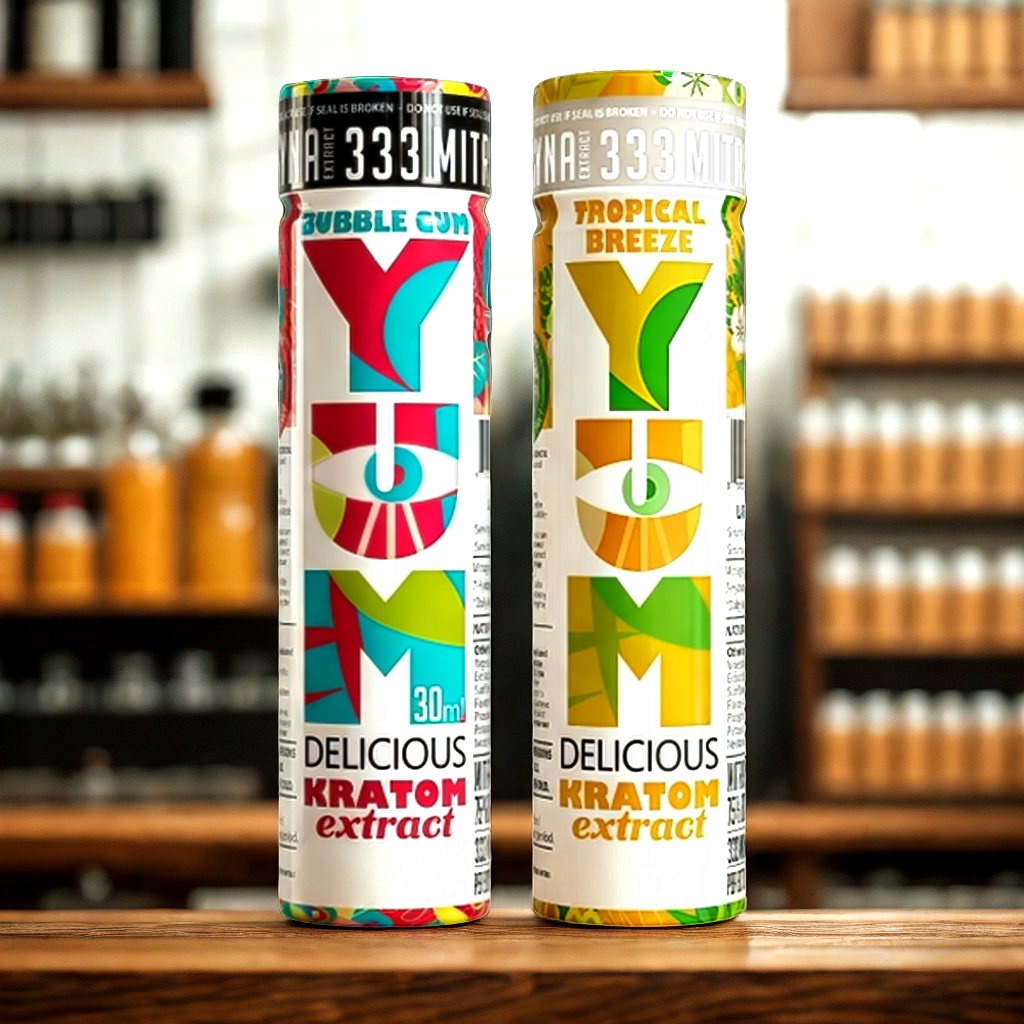
YUM was built to solve the problems most kratom products ignore. The taste problem (ours is actually drinkable). The balance problem (formulated for clean, focused energy without the harsh edges). The transparency problem (lab results available, ingredients listed, nothing hidden).
If you want to establish your quality baseline with a product designed by people who actually care about your experience, start with a single shot. Apply everything you learned here. Run through the checklist. See how it compares to whatever else you’ve tried.
Explore our kratom products and find out what quality actually feels like. Because once you know, you’ll never settle for garbage again.
For adults 21+ only. Start with a small serving. Consult a healthcare provider if you have any medical conditions or take medications.