
Liquid Kratom Extract: The Buyer's Evaluation Framework for Finding Quality in a Category Full of Garbage
 Jess Morales
Liquid Kratom Extract: The Buyer’s Evaluation Framework for Finding Quality in a Category Full of Garbage
You’re standing at a kava bar, or maybe scrolling through an online shop, staring at fifteen different liquid kratom extract options. Every bottle promises something vaguely amazing. Every label looks kind of the same. The prices range from “suspiciously cheap” to “is this made of gold?” And you have absolutely no idea what actually matters.
Here’s the thing: you’ve already decided you want liquid extract specifically. Not powder you have to measure and mix. Not capsules that take forever to kick in. Liquid. Fast, convenient, precise. The format makes sense for your life.
But choosing between liquid extracts? That’s where most people get lost. The category is flooded with products ranging from genuinely excellent to borderline sketchy, and the marketing all sounds identical. This guide exists to give you an actual framework for telling the difference. No sales pitch, no hype. Just the practical evaluation criteria that separate quality from garbage.
Why Liquid Extract? What This Format Actually Offers (And What It Doesn’t)
Before diving into evaluation criteria, let’s be clear about why someone chooses liquid in the first place. This isn’t about liquid being “better” than other formats. It’s about fit.
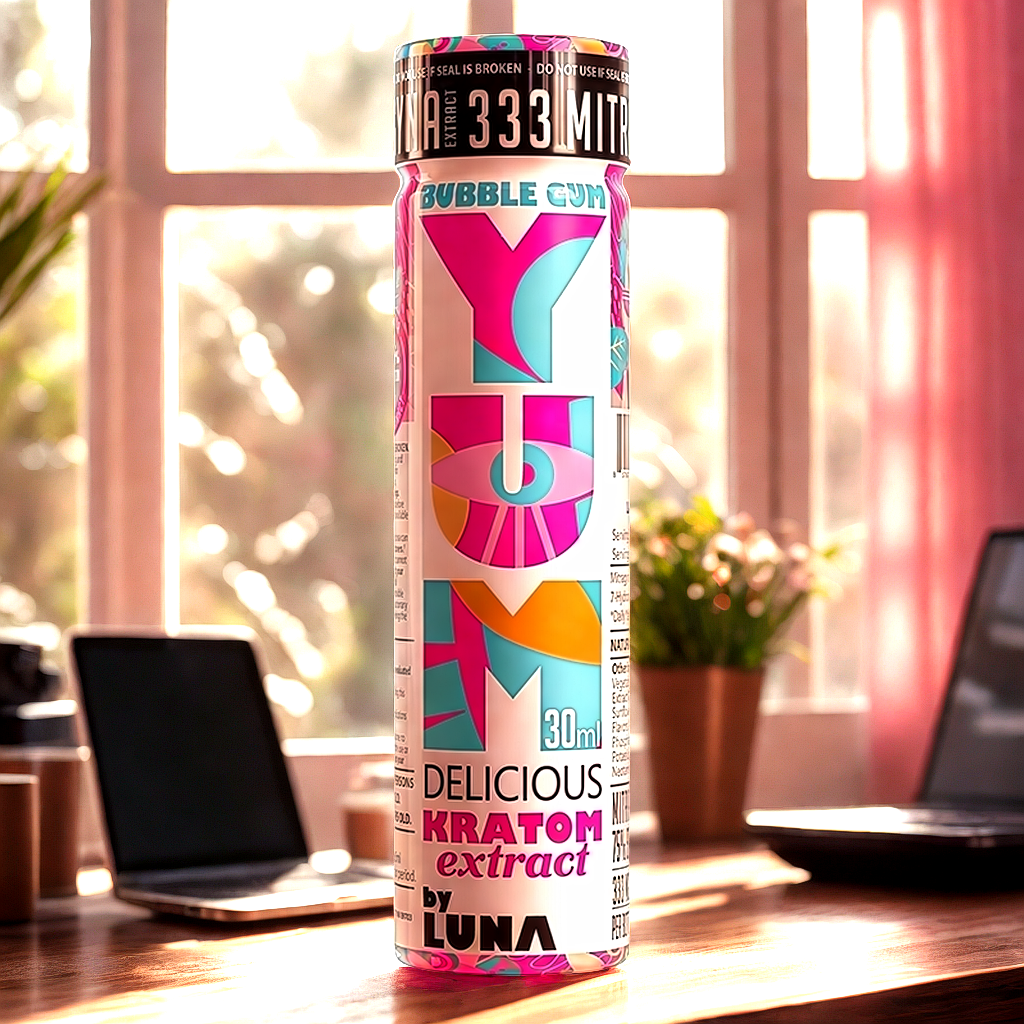
Liquid extract makes sense when you want:
- Faster onset – Liquids typically absorb more quickly than capsules or powder that needs to break down in your stomach. Most people notice effects within 20-30 minutes.
- Precise, consistent dosing – A measured capful is the same every time. No guessing, no scales, no powder getting everywhere.
- Portability without mess – A small bottle fits in a pocket, bag, or desk drawer. No powder clumps, no capsule bottles rattling around.
- No prep time – You don’t need to mix anything, brew anything, or toss and wash anything. Just measure and drink.
Liquid extract might not be ideal if:
- You’re extremely cost-sensitive (extracts cost more per serving than raw powder)
- You prefer customizing exact milligram doses (capsules offer more granular control)
- You want the ritual of preparing something (some people genuinely enjoy brewing tea)
If you’re still figuring out whether liquid is right for you, our comparison of kratom shots vs. powder vs. capsules breaks down the practical tradeoffs in more detail. But assuming you’ve landed on liquid, let’s talk about what actually matters when evaluating products.
The Alkaloid Balance Problem Most Liquid Extracts Get Wrong
Kratom contains dozens of alkaloids, but two matter most for your experience: mitragynine and 7-hydroxymitragynine (often called 7-OH). Understanding how they work together is the single most important thing for evaluating liquid extracts.
Here’s the oversimplified version: mitragynine tends to produce more energizing, focus-oriented effects. 7-OH tends toward relaxation and sedation. In the raw leaf, these exist in a natural ratio. But extraction processes can dramatically alter that balance.
The problem: Many liquid extracts chase “potency” by concentrating 7-OH specifically. On paper, this sounds impressive. In practice, it often creates an unbalanced experience: foggy, overly sedating, or just generally off. More isn’t better when the ratio is wrong.
What you want is a balanced alkaloid profile that preserves something close to the plant’s natural ratio, just in concentrated form. This delivers clean energy without the crash, focused attention without jitters, and effects that last 3-4 hours without leaving you feeling depleted.
For a deeper understanding of how these alkaloids work, our complete science guide to kratom alkaloids covers the chemistry in accessible terms.
What to ask/look for:
- Does the brand discuss alkaloid balance, or just tout “maximum strength”?
- Is there any transparency about extraction methods?
- Do reviews mention clean, functional energy, or do people describe feeling “too heavy” or “knocked out”?

Brands focused purely on potency numbers are usually missing the point. The goal isn’t maximum strength. It’s maximum usefulness for your actual life.
What to Actually Look For on a Liquid Extract Label (And What’s Missing)
Labels are where quality brands differentiate themselves from questionable ones. Here’s your checklist for what responsible companies include versus what shady ones hide.
Green Flags (What Quality Brands Show)
Third-party testing disclosure: This is non-negotiable. Any liquid extract worth buying should be tested by an independent lab for purity, potency, and contaminants. Look for mention of COAs (Certificates of Analysis) on the label or website. Better yet, brands that make their lab results accessible are showing you they have nothing to hide.
Clear serving size information: You should know exactly what constitutes one serving and how much alkaloid content that serving contains. “Proprietary blend” with no specifics is a red flag.
Alkaloid content disclosure: Quality brands tell you what’s actually in the bottle. Not just “kratom extract” but actual alkaloid information that lets you understand what you’re taking.
Responsible dosing guidance: Look for products that recommend starting with one capful or small serving. Companies that encourage higher doses right away are prioritizing repeat purchases over your wellbeing.
Age restriction (21+): Responsible kratom brands explicitly state this product is for adults 21 and over.
Red Flags (What Shady Products Hide)
“Proprietary blend” with no specifics: This usually means “we don’t want you to know what’s actually in here.” It’s a legal way to hide weak formulations or imbalanced alkaloid profiles.
Wild potency claims with no verification: “100x stronger!” means nothing without independent testing to back it up. Anyone can put big numbers on a label.
No COA availability: If you can’t find third-party test results anywhere (on the bottle, website, or by request), assume the worst.
Vague or missing origin information: Quality kratom comes from specific regions with specific growing and harvesting practices. Companies that can’t tell you where their kratom comes from probably don’t know themselves.
No contact information: If there’s no way to reach the company with questions, that’s not a company. That’s a print-on-demand operation hoping you don’t ask questions.
The Taste Problem Nobody’s Solving (Except People Who Actually Tried)
Let’s address the elephant in the room: most liquid kratom extracts taste absolutely terrible. We’re talking bitter, earthy, aggressively unpleasant. The kind of taste that makes you question your life choices mid-sip.
There’s a reason for this. Kratom is intensely bitter in its natural state, and concentrating it through extraction concentrates that bitterness too. Many companies basically shrug and say “that’s just how it is.” They expect you to chase it with orange juice, hold your nose, or just tough it out.
Here’s why taste matters more than you think: You won’t stick with something that makes you gag every time. Sustainability isn’t just about responsible dosing. It’s about whether you can actually integrate this into your life without dreading it. A liquid extract you genuinely don’t mind drinking is one you’ll use consistently and appropriately.
Some brands have invested real effort into making liquid extracts that taste decent (or even good). This isn’t magic. It’s formulation work: natural flavoring, careful ingredient selection, and actually caring about the experience beyond just “does it technically work.”
For a deeper look at why taste varies so dramatically in this category, check out why most kratom extracts taste like dirt.
What to look for:
- Reviews that specifically mention taste (people complain loudly about bad taste)
- Brands that actively market palatability (if they’re not mentioning it, they’re probably not prioritizing it)
- Willingness to invest in formulation (cheap products rarely taste good)
Dosing Liquid Extracts: The “Less Is More” Reality Check
Liquid extracts are concentrated. That’s the whole point. But concentration means that small amounts go a long way, and this is where many newcomers make mistakes.
Start with one capful or small serving. This isn’t overly cautious advice from lawyers. It’s practical guidance from people who’ve seen what happens when someone treats extract like powder and takes way too much. The effects can be overwhelming, uncomfortable, and the exact opposite of what you wanted.
Timing expectations:
- Onset: Most people notice effects within 20-30 minutes with liquid extract
- Peak: Generally around 1-2 hours
- Duration: Expect 3-4 hours of clear focus and energy
Finding your sweet spot: Start small, wait at least an hour before considering if you need more (most people don’t), and pay attention to how you feel. The goal isn’t to maximize effects. It’s to find the minimum effective amount that gives you what you’re looking for.
Why chasing higher doses backfires: More doesn’t mean better with kratom. Higher doses often shift the experience toward sedation and fog, which is the opposite of what most people want from their daily driver. If you find yourself needing more and more to feel the same thing, that’s not a product quality issue. That’s a signal to take a break.
For practical guidance on timing and protocol, our field guide to using kratom extract covers everything from first-time expectations to building sustainable routines.
Anyone with medical conditions should consult a healthcare provider before using kratom.
The Safety Conversation: What the Headlines Get Right and Wrong
If you’ve researched liquid kratom extract online, you’ve probably seen some alarming headlines. FDA warnings. Mayo Clinic articles questioning safety. Horror stories in the news.
Here’s the honest take: these concerns aren’t fabricated, but they also don’t tell the complete story.
What the headlines get right:
- Kratom is not FDA-approved for any specific use
- Quality varies dramatically across products, and some on the market are genuinely problematic
- Like any substance, kratom can be misused, especially at irresponsible doses
- Interactions with other substances (including medications) are possible and should be considered
What the headlines often miss:
- Many reported issues trace back to adulterated products, not properly produced kratom
- Quality control (third-party testing, balanced formulations) eliminates many concerns
- Responsible use patterns differ dramatically from problematic use patterns
- Millions of people use kratom without incident, but “person uses product responsibly and feels fine” doesn’t make news
Legality varies by state: Kratom is banned in Alabama, Arkansas, Indiana, Rhode Island, Vermont, and Wisconsin, plus various counties and cities. Always check your local regulations.
The balanced perspective: Approach liquid kratom extract the same way you’d approach any bioactive substance. Choose quality products from transparent companies. Start with small amounts. Don’t mix with alcohol or other substances without understanding potential interactions. Listen to your body. And if you have underlying health conditions, talk to a healthcare provider.
For a deeper exploration of how to evaluate conflicting information about kratom, our critical thinking guide walks through how to assess sources and claims.
Making Your Decision: The Practical Framework
You now have everything you need to evaluate any liquid kratom extract on the market. Here’s your checklist, summarized:
Alkaloid Balance:
- Does the brand discuss balance, not just potency?
- Are effects described as clean, functional energy (not sedating or overwhelming)?
- Is there transparency about extraction methods?
Third-Party Testing:
- Are COAs available (on label, website, or by request)?
- Is there independent verification of purity and potency?
- Does the company seem proud of their testing, or hide behind vague claims?
Taste Investment:
- Do reviews mention taste (good or bad)?
- Has the company clearly invested in making the product drinkable?
- Can you actually see yourself using this regularly?
Company Transparency:
- Is there real contact information?
- Can you find information about sourcing?
- Does the company provide responsible dosing guidance?
Responsible Messaging:
- Do they recommend starting small?
- Is there an explicit 21+ age restriction?
- Do they avoid making medical claims or comparing to prescription medications?
Run any liquid kratom extract through this framework before buying. The products that check these boxes are worth your money. The ones that don’t are gambling with your experience and potentially your wellbeing.
See how YUM stacks up: We built our liquid extract specifically around these principles: balanced alkaloid profile for clean energy without the crash, third-party testing with publicly available lab results, a flavor profile people actually enjoy drinking, and transparent communication about everything from sourcing to dosing. If the criteria in this guide matter to you, check out our products and see if they meet your standards.
Frequently Asked Questions
How is liquid kratom extract different from kratom powder or capsules?
Liquid extract is concentrated, meaning smaller amounts contain more alkaloids than equivalent volumes of powder. It also absorbs faster (typically 20-30 minutes to onset versus 45-60 minutes for capsules) and eliminates the need for measuring, mixing, or swallowing multiple pills. The tradeoff is usually higher cost per serving and less granular dose customization.
What should I look for when comparing liquid kratom extract products?
Focus on five things: alkaloid balance (not just potency), third-party testing with available COAs, clear serving size and dosing guidance, taste quality (check reviews), and company transparency about sourcing and contact information. Products that nail all five are worth premium prices. Products missing multiple criteria are gambles.
How much liquid kratom extract should I take as a first-timer?
Start with one capful or the smallest recommended serving size. Wait at least an hour before considering whether you want more (you probably won’t need it). Effects typically last 3-4 hours, so there’s no rush. Finding your minimum effective dose is more valuable than maximizing intensity.
Why do most liquid kratom extracts taste so bad?
Kratom is naturally bitter, and extraction concentrates that bitterness. Most companies don’t invest in formulation work to address this because it’s expensive and technically challenging. The brands that do prioritize taste have usually spent significant time and money on natural flavoring and ingredient selection. If a company markets palatability, they’ve likely earned that claim.
Is liquid kratom extract legal in my state?
Kratom is banned in Alabama, Arkansas, Indiana, Rhode Island, Vermont, and Wisconsin. Several counties and cities within otherwise legal states also have restrictions. Always verify your local regulations before purchasing. Laws can change, so check current status even if you’ve bought kratom before.