
Kratom Explained Through Your Existing Habits: A Pattern-Recognition Guide for Coffee Drinkers, Social Drinkers, and Performance Seekers
 Ryan Okafor
Kratom Explained Through Your Existing Habits: A Pattern-Recognition Guide for Coffee Drinkers, Social Drinkers, and Performance Seekers
You already have a system. Maybe you’re three cups of coffee deep by noon. Maybe you grab a drink or two at networking events to take the edge off. Maybe your pre-workout hits so hard your hands shake during the first set. Or maybe you’ve built a nootropic stack that would make a pharmacist raise an eyebrow.
Point is, you’ve already figured out what works for energy, social situations, focus, and performance. You’re not starting from zero.
So when someone mentions kratom, the question isn’t really “what is it?” in some abstract sense. The real question is: how does it compare to what I’m already doing?
That’s what this guide delivers. No generic explainer content. No scare tactics. Just a straight translation of kratom into the language of substances you already understand and use. Think of it as a comparison framework for adults 21+ who want to make informed decisions based on their existing habits.
Why Comparing Kratom to What You Already Know Actually Works
Most “what is kratom” content treats it like you’ve never consumed anything more interesting than tap water. They explain alkaloids, botanical origins, Southeast Asian history. All useful, sure. But if you’ve already dialed in your caffeine intake, experimented with adaptogens, or figured out your alcohol tolerance, you don’t need Botany 101.
You need context. Specifically, you need to know how kratom’s effects map onto experiences you’ve already had.
Here’s why this approach works: your brain understands new things through comparison. When someone describes a food you’ve never tasted, they don’t recite its molecular structure. They say “it’s kind of like chicken, but more tender” or “imagine if a mango and a peach had a baby.” That’s how humans process novelty.
Kratom deserves the same treatment. It’s a botanical extract from the Mitragyna speciosa tree (if you want the complete science behind the alkaloids, we’ve covered that elsewhere). But for practical purposes, what matters is how it feels compared to what you already know.
So let’s run through the main comparison points based on your existing habits.

If You’re a Coffee Person: How Kratom’s Energy Profile Compares
You know the coffee ritual intimately. The anticipation while it brews. That first sip that signals your brain it’s time to wake up. The peak focus around 30-45 minutes in. And then, depending on how much you drank and when, either smooth productivity or jittery restlessness followed by an afternoon crash that makes you reach for cup three (or four).
Kratom’s energy profile hits differently. Here’s the breakdown:
Onset time: Coffee kicks in within 15-30 minutes for most people. Kratom, especially in extract form, typically takes 20-40 minutes to feel the effects, sometimes a bit longer if you’ve eaten recently.
The quality of energy: Coffee gives you stimulation. Your heart rate increases, alertness spikes, thoughts accelerate. Kratom gives you what many describe as “clean energy,” a focused alertness without the wired feeling. It’s less about raw stimulation and more about sustained engagement.
Duration: A cup of coffee’s main effects last 3-5 hours, though caffeine’s half-life means it affects your sleep long after you stop feeling it. Kratom’s noticeable effects typically run 3-4 hours, then taper gradually.
The crash: This is where the comparison gets interesting. Coffee’s crash is real, especially if you’ve been pounding it all day. Blood sugar fluctuations, adenosine rebound, the whole mess. Many kratom users report experiencing no crash, just a gentle return to baseline.
Jitters: High coffee intake makes some people shake, feel anxious, or get that unpleasant heart-racing sensation. Kratom doesn’t typically produce that jittery response, even in people sensitive to caffeine.

Now, the honest part: kratom isn’t caffeine. It works through completely different mechanisms (the alkaloids interact with different receptors than caffeine does). So while comparisons are useful, they’re not perfect translations. Some people find kratom complements their morning coffee. Others use it as an afternoon alternative when they don’t want more caffeine but need sustained focus. Some replace coffee entirely.
If you’re curious about ditching the jitters altogether, we’ve written extensively about kratom as an alternative for people tired of caffeine dependency.
The right answer depends on your goals. Kratom isn’t “better” than coffee any more than tea is “better” than espresso. Different tools for different situations.
If You’re a Social Drinker: How Kratom’s Social Effects Differ From Alcohol
Two drinks at a networking event. A glass of wine at dinner. A couple beers while watching the game with friends. You’re not getting hammered; you’re using alcohol strategically to relax, loosen up, and enjoy social situations more easily.
Kratom enters the picture as an alternative that some people prefer in exactly these contexts. Here’s how the two compare:
Relaxation: Alcohol depresses the central nervous system, which creates that familiar loosening sensation. Kratom can produce a sense of ease and sociability through different mechanisms. The relaxation feels different, less like being sedated and more like being comfortable in your own skin.
Impairment: This is the big one. Two or three drinks affect your coordination, reaction time, and judgment. Kratom, at reasonable amounts, doesn’t impair you the same way. You can drive home afterward. You can have a complex conversation without slurring. Your texts actually make sense.
Social ease: Both alcohol and kratom can make social situations feel easier. With alcohol, there’s a cognitive blunting that reduces social anxiety by reducing cognition across the board. With kratom, users often describe staying sharp and present while feeling more relaxed and talkative.
The next morning: Here’s where the comparison really diverges. Even moderate drinking can leave you feeling sluggish, dehydrated, or foggy the next day. The “no hangover feeling” is one of the most consistent things kratom users report. You wake up feeling normal, not like you need to recover.
Calories: A couple cocktails can easily add 400-600 calories to your evening. Kratom extract has essentially none.
For a deeper look at this specific comparison, check out our guide for sober curious people exploring kratom as an alcohol alternative.
The honest caveat: kratom isn’t intoxication. If what you’re looking for is being drunk, kratom won’t deliver that. It’s not trying to. Some people want the alcohol experience specifically, and that’s fine. But if you want social ease without impairment, without hangovers, without the calorie hit, kratom offers a genuinely different option.
Many people who discover kratom find themselves choosing it over their second or third drink at events. Not because alcohol is “bad,” but because kratom does what they actually wanted the drinks to do (relax, socialize easily) without what they didn’t want (feeling sloppy, headache the next day).
If You Use Pre-Workout or Energy Drinks: Where Kratom Fits in the Stimulant Spectrum
Pre-workout supplements are designed to hit hard and fast. Caffeine, beta-alanine (that tingly feeling), citrulline, maybe some other stimulants depending on the brand. You drink it, you feel it, you lift heavy things, and then an hour or two later you crash back to earth wondering why your heart was beating that fast.
Energy drinks operate similarly: quick spike, aggressive stimulation, inevitable crash.
Kratom sits in a different spot on this spectrum:
Intensity of stimulation: Pre-workout is designed to jack you up. It’s aggressive, sometimes uncomfortably so. Kratom’s energy is more like a steady hum than a scream. You feel focused and motivated without feeling like your chest might explode.
Duration: Pre-workout’s peak effects last 1-2 hours before dropping off. Kratom’s effects extend 3-4 hours, making it more suitable for longer sessions or situations where sustained energy matters more than a short burst.
Crash profile: This is where kratom really differs. Pre-workout crashes can be brutal, especially stacked on top of the cortisol spike from intense training. Kratom users consistently describe a smooth tapering rather than a crash.
Physical sensations: No beta-alanine tingles. No racing heart. No feeling like you need to immediately go lift something or you’ll vibrate through the floor.
Focus vs. aggression: Pre-workout often puts people in a hyped, aggressive headspace (which some lifters want). Kratom produces more of a focused, dialed-in sensation. Some find this better for technical work, skill-based training, or endurance activities where staying calm matters.
Athletes and gym-goers adding kratom to their toolkit typically use it strategically, not as a daily pre-workout replacement but for specific situations: long training sessions, recovery days when they still want to move but don’t need aggressive stimulation, or times when they’ve already had too much caffeine but still want to train.
If you’re specifically interested in how kratom fits athletic and training contexts, we’ve written an athlete’s guide covering that in more detail.
The honest note: kratom isn’t a pre-workout supplement. It doesn’t contain the ergogenic aids designed to enhance acute exercise performance. If you need that specific pre-workout hit, kratom won’t substitute. But if you’ve grown tired of the stimulant roller coaster and want something that supports focus and energy without the aggressive ups and downs, it’s worth considering.
If You’ve Tried Nootropics or Adaptogens: How Kratom Fits That Framework
Nootropic users think differently about supplementation. You’re not just looking for “energy” or “relaxation.” You’re interested in mechanisms, stacking protocols, dose-response curves, and how substances interact with your particular neurochemistry.
Here’s how kratom maps onto the nootropic framework:
Mechanism awareness: Kratom’s primary active compounds are alkaloids, primarily mitragynine and 7-hydroxymitragynine. These interact with opioid receptors (particularly at higher amounts) and adrenergic receptors (contributing to the energizing effects at lower amounts). This is different from racetams, different from modafinil, different from adaptogens like ashwagandha or rhodiola. It’s its own thing.
Where it sits on the spectrum: Kratom isn’t technically a nootropic (it doesn’t primarily target cognitive enhancement through acetylcholine or similar pathways). It’s more accurately described as a botanical with psychoactive properties that can support focus, energy, and mood. Think of it as adjacent to the nootropic category rather than inside it.
The “less is more” philosophy: This will resonate with experienced nootropic users. Kratom has a unique dose-response curve where lower amounts tend to produce more energizing, focus-enhancing effects while higher amounts shift toward relaxation and sedation. Finding your optimal dose requires the same kind of careful titration nootropic users are familiar with.
Stacking considerations: Many nootropic users want to know how kratom fits with their existing stack. Honestly, kratom often works best alone or with minimal combinations. Its effects are comprehensive enough that adding more compounds often just muddies the experience. Start simple, assess how kratom affects you in isolation, and only consider combinations after you understand its individual effects on your system.
Tolerance and cycling: Like many active compounds, regular kratom use can lead to tolerance. Experienced supplement users already understand the value of cycling (taking breaks, rotating substances). The same principle applies here. For more on this, check out our guide to sustainable use and tolerance management.
If you’re deep into the nootropic world, you’ll appreciate that kratom isn’t marketed with exaggerated cognitive claims. It’s a botanical that affects how you feel (energy, mood, comfort), which can indirectly support focus and productivity. But it’s not a study drug, and pretending otherwise would be dishonest.
The Honest Truth: What Makes Kratom Different From All of These
Comparisons are useful starting points, but here’s what needs to be said directly: kratom is its own thing.
It’s not coffee with a different molecule. It’s not alcohol without the impairment. It’s not a milder pre-workout. It’s not a nootropic with different receptor targets. These comparisons help you understand the territory, but they’re maps, not the terrain itself.
The experience of kratom is unique. People describe it as clean energy with a sense of well-being. Focused but relaxed. Alert without anxiety. Comfortable without sedation. These descriptions make more sense after you’ve actually tried it than before.
A few things that make kratom genuinely distinct:
- The dose matters a lot. Lower amounts lean energizing; higher amounts lean relaxing. The same product can produce different experiences depending on how much you take. Most people find their sweet spot with less rather than more.
- Quality varies wildly. Unlike coffee or commercial pre-workout, kratom’s effects depend heavily on the source, the processing, and the alkaloid balance. Bad kratom exists. Lots of it. Good kratom, from suppliers who prioritize lab-tested quality, is a different experience entirely.
- It’s not for everyone. Some people try kratom and feel nothing. Some try it and don’t enjoy the experience. Some try it and wonder why they ever bothered with their previous habits. Individual response varies significantly.
- Responsible use matters. Kratom isn’t a free lunch. Using it daily, in increasing amounts, without breaks isn’t a good long-term strategy. The people who have the best relationship with kratom use it thoughtfully, not compulsively.
Legal note: Kratom is legal in most U.S. states but banned in Alabama, Arkansas, Indiana, Rhode Island, Vermont, and Wisconsin. Some counties and cities have additional restrictions. If you’re traveling or ordering online, verify legality in your location. Also, if you have medical conditions or take medications, consult your healthcare provider before trying kratom. This isn’t legal disclaimer fluff; it’s genuinely important.
This guide is for adults 21 and older making informed decisions about their own consumption choices.
Finding Your Reference Point: A Quick Self-Assessment
Based on what you’ve read, one of these comparisons probably resonated more than the others. Here’s how to use that insight:
If the coffee comparison spoke to you: You’re likely looking for clean, sustained energy without jitters or crashes. You’re interested in focus and productivity, not relaxation. Start with a small amount (one capful if using an extract shot) in the morning or early afternoon. Treat it like an experiment: track how you feel at 30 minutes, 1 hour, 2 hours. Compare to your typical coffee experience.
If the alcohol comparison spoke to you: You’re interested in social ease, relaxation, and potentially replacing some drinks with something that doesn’t impair you or leave you foggy the next morning. Try kratom in a social context where you’d normally have a drink or two. Again, start small. Notice how you feel in conversation, how present you are, how you feel the next day.
If the pre-workout comparison spoke to you: You want sustained energy for activity without the aggressive spike and crash. Timing matters here: try kratom 30-45 minutes before your session. Don’t stack it with other stimulants your first time; you want to isolate the experience.
If the nootropic comparison spoke to you: You approach this analytically and want to understand how kratom interacts with your specific system. Keep notes. Track doses carefully. Pay attention to your personal dose-response curve. Consider cycling from the start rather than establishing daily use.
Regardless of which category fits you, the universal advice is: start with less than you think you need. One capful. See what happens. You can always take more another time. You can’t take less after you’ve already taken too much.
If you want more detailed first-time guidance, read our first-timer’s guide to methods, timing, and getting it right.
Frequently Asked Questions
Can I replace my morning coffee with kratom, or should I use both?
Both approaches work depending on your goals. Some people completely replace coffee and find kratom provides the focus and energy they need without caffeine’s downsides. Others use coffee in the morning and kratom in the afternoon when they don’t want more caffeine but need a second wind. And some combine them (coffee first, kratom a few hours later). There’s no single right answer. The key is paying attention to your body and not overdoing total stimulation. If you’re caffeine-sensitive, replacing might make more sense. If you love your morning coffee ritual and just want something different for afternoons, using both strategically works fine.
How does kratom compare to having a drink or two at a social event?
The subjective experience is different. Alcohol creates relaxation through sedation and cognitive blunting. Kratom produces a relaxed, sociable feeling while keeping you mentally sharp. You won’t feel “buzzed” in the alcohol sense. You’ll feel at ease, talkative, and comfortable without the sloppiness or impairment. The biggest practical difference is what happens after: no hangover feeling, no next-day fog, and you can drive yourself home. Many people who discover kratom find it delivers what they actually wanted from those social drinks (relaxation, easier conversation) without what they didn’t want (feeling sloppy, calories, morning-after regret).
Is kratom better before a workout than pre-workout supplements?
“Better” depends entirely on what you’re trying to achieve. If you want aggressive stimulation, performance-enhancing compounds, and that jacked-up feeling, kratom won’t deliver that. It’s not designed for acute performance enhancement. But if you want sustained energy, focus without anxiety, and the ability to train without feeling like your heart might explode, kratom has advantages. It’s particularly popular for longer sessions, endurance work, technical skill practice, or times when you’ve already had too much caffeine. Think of it as a different tool, not a direct replacement.
Why do nootropic users seem to like kratom? Is it actually a nootropic?
Technically, kratom isn’t a nootropic since it doesn’t primarily target cognitive enhancement through traditional nootropic mechanisms. However, nootropic enthusiasts tend to like it because it fits the broader goal of optimizing how you feel and function. It affects energy, mood, and comfort in ways that can indirectly support focus and productivity. Nootropic users also appreciate kratom’s dose-response complexity (where finding your optimal amount requires the same careful titration they’re used to) and the fact that it responds to the “less is more” principle they understand from other compounds.
Where This Leaves You
You came here wondering how kratom compares to what you already know and use. Hopefully you now have useful reference points: it’s smoother than coffee, more functional than alcohol, less aggressive than pre-workout, and adjacent to (but distinct from) nootropics.
But comparisons only get you so far. At some point, the only way to know how kratom actually works for you is to try it.
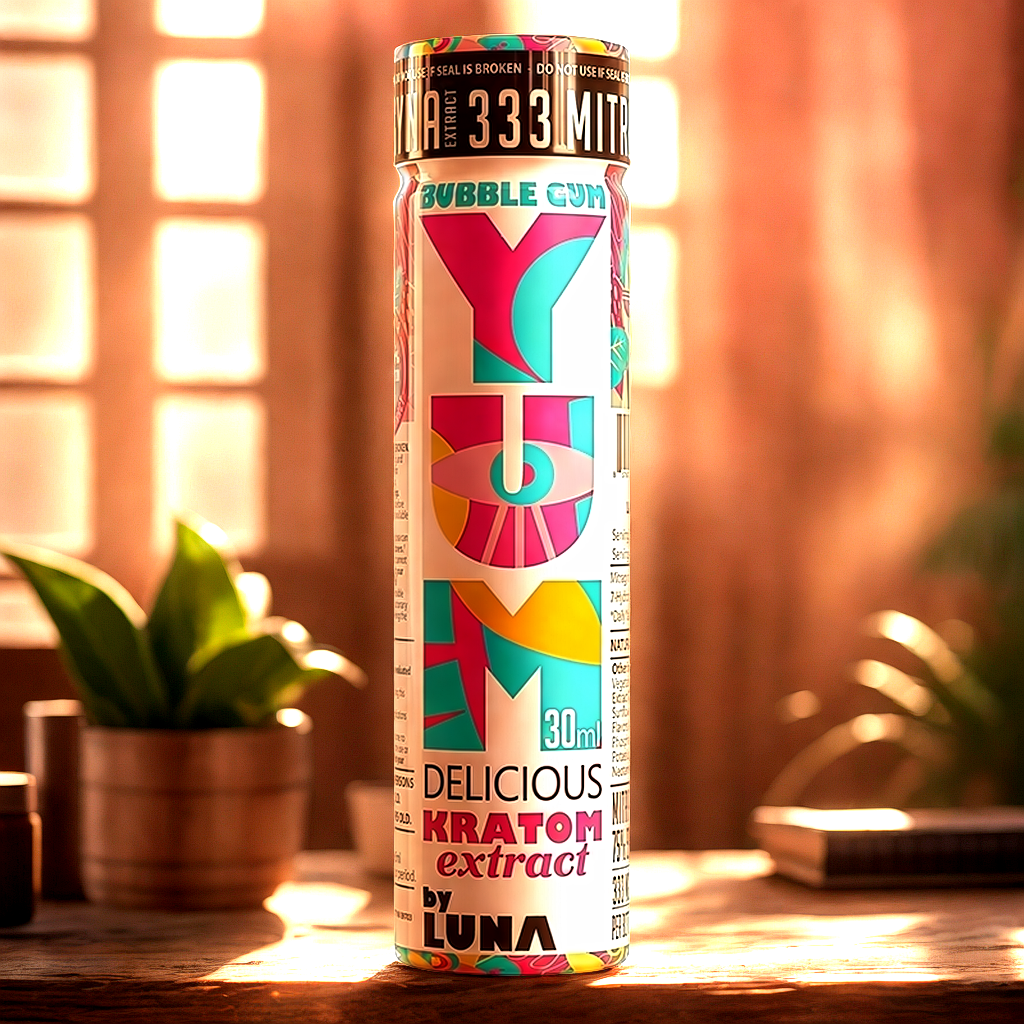
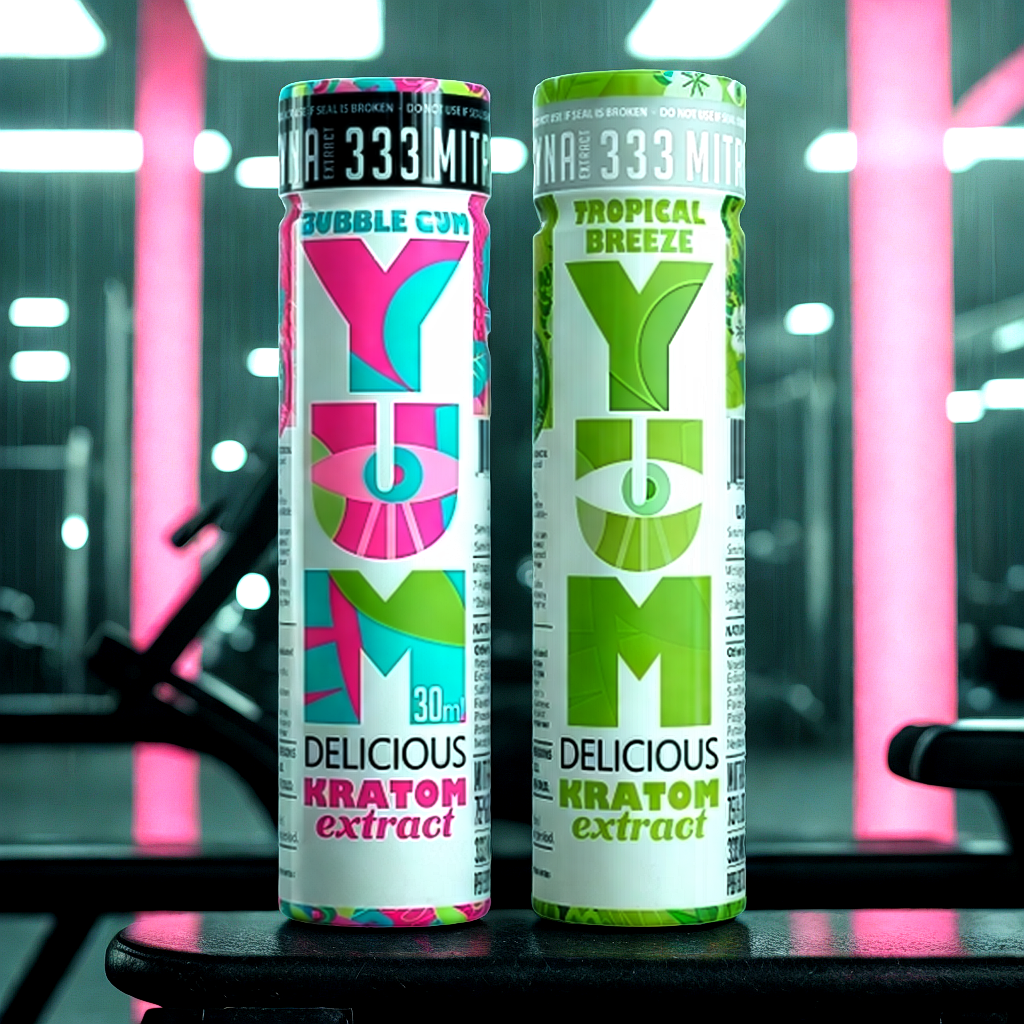
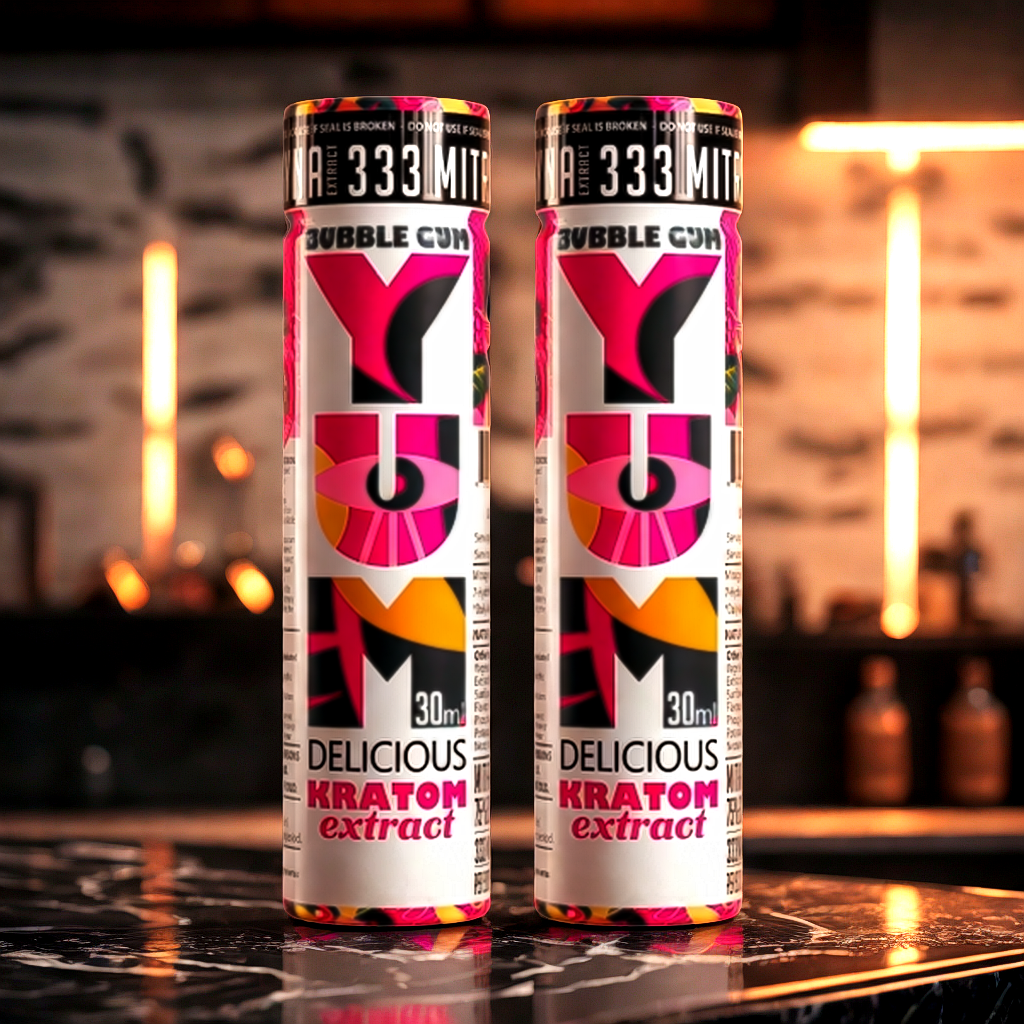
If you’ve identified your pattern and want to explore a kratom extract that prioritizes balanced alkaloids, tastes better than the garbage most brands put out, and comes from a company that actually tests what they sell, check out our kratom products. YUM was built for people who care about quality and experience, not just people chasing the strongest possible hit.
Start with one capful. Pay attention. Compare to what you know. Draw your own conclusions.
That’s how informed adults make decisions about what goes in their bodies. No hype required.